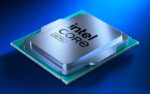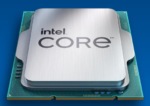
Intel has introduced its 14th generation Core processors (“Raptor Lake Refresh”), delivering an important performance boost for demanding industrial applications. The key news for developers and operators of industrial PCs (IPCs): the new CPUs continue to use the established LGA1700 socket, which simplifies upgrades.
Performance optimization for industrial requirements
The 14th generation builds on the proven architecture of its predecessors and delivers increased computing power through optimized clock speeds and, in some cases, more Efficient-cores (E-Cores). This is particularly relevant for compute-intensive tasks in industrial environments, such as complex automation control, real-time data processing, machine vision or demanding edge computing scenarios.
LGA1700 compatibility: investment protection and simplified migration
Retaining the LGA1700 socket is a significant advantage for the industrial sector, which values longevity and low qualification costs. Existing IPC designs based on mainboards with Intel 600-series or 700-series chipsets (in particular Q670E, W680, but also Z790, B760 etc.) can be made ready for the new processors via a BIOS/UEFI update.
This enables system integrators and OEMs to:
- Protect existing investments: Existing mainboard designs can continue to be used.
- Reduce qualification effort: The core platform remains the same, which simplifies testing and validation.
- Seamless performance increase: An upgrade to higher performance is possible without disruptive platform changes.
Conclusion: An evolutionary step focused on stability
With the 14th generation, Intel offers an attractive performance increase without sacrificing the platform stability that is so important for industry. Continued LGA1700 support greatly simplifies the integration of the latest processor technology into existing and new industrial PC systems and thus supports long product life cycles. Leading manufacturers of industrial mainboards have already announced or provided corresponding BIOS updates.